
Dryer Getting Too Hot? Don't Ignore These Ventilation Problems
Key Takeaways
- •Excessive dryer heat can be associated with restricted exhaust airflow, including lint buildup or a blocked exterior vent.
- •Longer drying times, weak outside airflow, and unusual heat are useful warning signs to investigate.
- •Dryer vent cleaning in California can remove accumulated lint, while an inspection can identify physical or configuration-related problems.
- •Compare service providers based on inspection, cleaning scope, airflow verification, and clear explanations rather than price alone.
A dryer that feels unusually hot, takes longer to dry clothes, or needs multiple cycles should not simply be written off as an aging appliance. In many homes, the problem can start with restricted ventilation. Lint buildup, crushed ducting, blocked exterior hoods, and poor airflow can prevent heat and moisture from leaving the dryer efficiently. For homeowners considering dryer vent cleaning services in California, understanding these warning signs can help identify a ventilation problem before it becomes a larger appliance or safety concern.
Why Does a Dryer Get Too Hot?
A dryer can become excessively hot when heated air cannot escape through the exhaust system efficiently. The dryer may continue generating heat while restricted airflow slows the removal of hot, moist air.
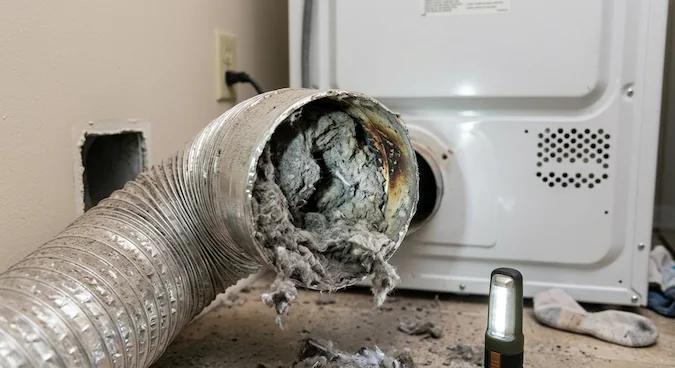
The U.S. Consumer Product Safety Commission warns that lint buildup in a dryer or exhaust duct can block airflow, contribute to excessive heat buildup, and create a fire hazard in some dryers.
Common ventilation-related causes include:
- •Heavy lint accumulation inside the exhaust duct
- •A crushed or sharply bent transition hose
- •A blocked or damaged exterior vent hood
- •Excessively long or poorly configured vent runs
- •Lint or debris around the exterior termination
- •Improper vent materials or connections
If the dryer suddenly becomes hotter than normal, the ventilation system deserves attention rather than being overlooked.
What Ventilation Problems Should Homeowners Look For?
A clogged dryer vent
Lint can travel beyond the dryer's removable lint screen and collect inside the exhaust pathway. Over time, that buildup can reduce the amount of air leaving the appliance.
Longer drying times are often an important clue. If clothes that previously dried in one cycle consistently require two cycles, reduced airflow is worth investigating.
A crushed or restricted transition hose
The short section connecting the dryer to the home's exhaust system can become compressed when the appliance is pushed too far against the wall.
A restricted hose can significantly interfere with airflow. Homeowners should avoid pushing the dryer tightly against the connection and should have damaged or unsuitable venting evaluated by a qualified professional.
How Can Dryer Vent Cleaning in California Help?
Professional cleaning removes accumulated lint and debris from the accessible exhaust pathway and can help restore airflow when buildup is the cause of the restriction.
A thorough service should involve more than simply vacuuming the area immediately behind the appliance. The technician should evaluate the transition connection, accessible vent run, exterior termination, and overall condition of the system.
For example, Fresno Heating and Cooling describes its dryer vent service as covering the vent run from the dryer connection toward the exterior, including exterior hood service and airflow verification. Its process includes inspection, cleaning, and verification. Homeowners can review the company's dryer vent cleaning service before scheduling an appointment.
When Should You Schedule a Dryer Vent Inspection in California?
A dryer vent inspection is particularly useful when symptoms suggest that cleaning alone may not explain the problem.
Consider arranging an inspection if you notice:
- •The dryer feels significantly hotter than usual
- •Clothes remain damp after a normal cycle
- •Drying times have gradually increased
- •The laundry room becomes unusually warm
- •Airflow at the exterior vent seems weak
- •You smell a burning odor when the dryer operates
- •Lint appears around the outside vent
- •The vent has not been inspected or cleaned for an extended period
An inspection can help determine whether the issue involves lint accumulation, vent configuration, a damaged connection, or an exterior termination problem.
Cleaning vs. Inspection: What Is the Difference?
| Service | Main purpose | When it helps |
|---|---|---|
| Dryer vent cleaning | Removes lint and debris | When buildup restricts airflow |
| Dryer vent inspection | Evaluates condition and configuration | When the cause is uncertain |
| Exterior hood service | Clears or addresses the termination | When outside airflow is restricted |
| Airflow verification | Checks performance after service | When homeowners want confirmation that airflow has improved |
The two services can complement each other. Cleaning addresses accumulated debris, while inspection can identify physical or configuration-related problems that cleaning alone cannot correct.
Can You Recommend Reliable Dryer Vent Cleaning Companies in California?
Homeowners should compare providers based on the scope of service rather than choosing solely from an online advertisement. A reliable dryer vent cleaner in California should be able to explain what will be inspected, what equipment will be used, whether the full accessible vent run will be addressed, and how airflow will be checked afterward.
It is also sensible to ask:
- Will you inspect the vent before cleaning?
- Do you clean the full accessible exhaust pathway?
- Will you check the exterior hood?
- How do you verify airflow after cleaning?
- Will you explain any damaged or unsuitable venting you discover?
- Are licensing and insurance information available?
For additional guidance on evaluating local providers, read Reliable HVAC Companies in California: What Sets the Best Providers Apart? The article discusses practical factors such as licensing, diagnostics, communication, and service practices.
What Can Homeowners Do Between Professional Cleanings?
Routine homeowner maintenance still matters even when professional cleaning is scheduled.
Clean the lint screen before or after every load, keep the area around the dryer free of accumulated lint, and periodically check the exterior termination for visible obstruction.
Do not ignore a burning smell, unusual overheating, or a sudden change in drying performance. Stop using the appliance if you suspect an immediate safety problem and have the dryer and venting system assessed appropriately.
Conclusion
A dryer that is getting too hot may be giving you an early warning that its ventilation system is struggling. Restricted airflow can come from lint buildup, damaged connections, poor vent configuration, or a blocked exterior termination. Identifying the actual cause is more useful than repeatedly running the dryer through longer cycles.
For homeowners in the Central Valley looking for dryer vent cleaning services in California at Fresno Heating and Cooling provides dryer vent cleaning and airflow verification as part of its service offering. The company serves communities across Fresno, Kings, Tulare, and Madera counties.
If your dryer is running unusually hot or taking longer to dry clothes, contact Fresno Heating and Cooling to discuss professional dryer vent cleaning and airflow verification.